
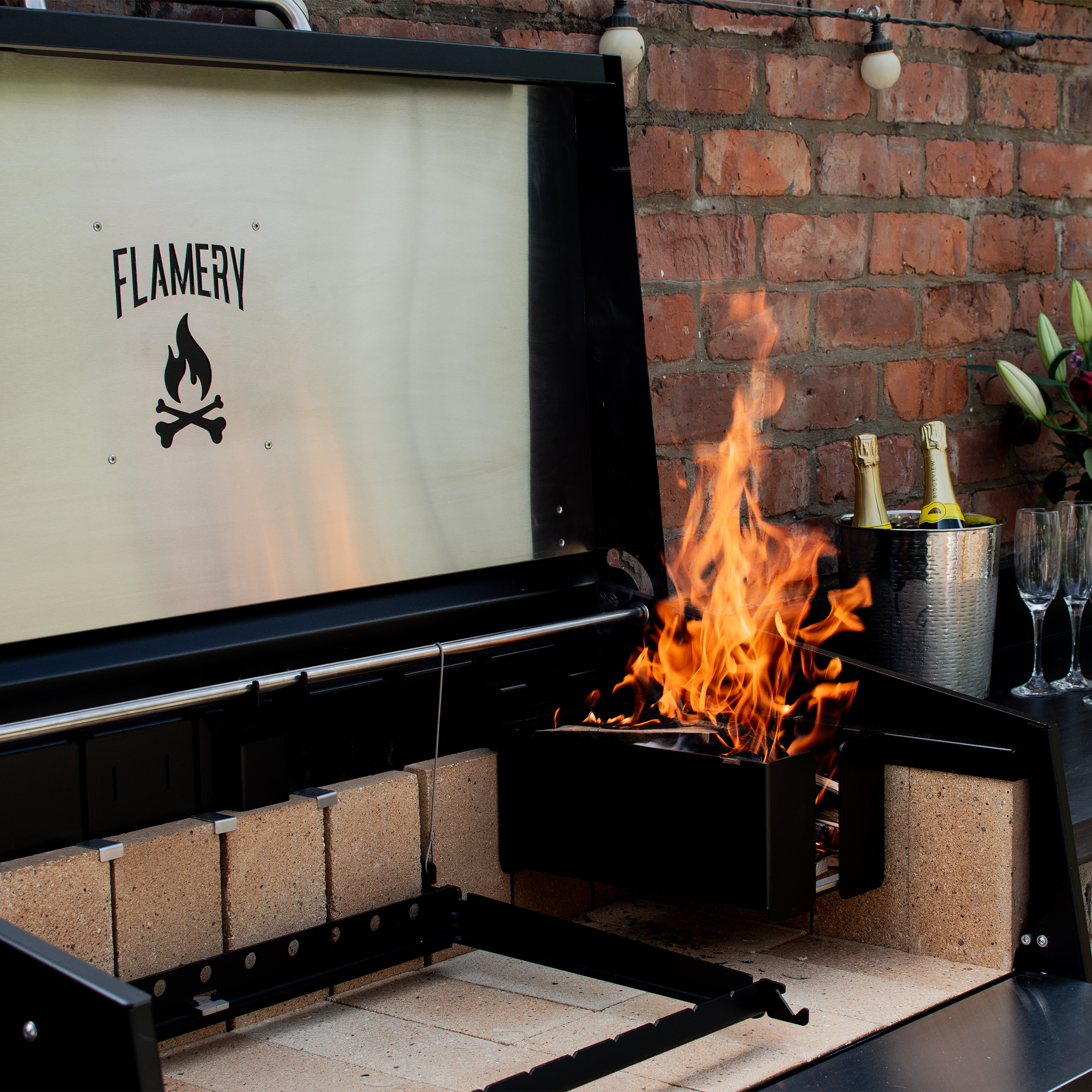
Cooking over real flames is about more than lighting a fire and sticking your meat on it - that just sounds painful. No, Asado cooking is about creating a system that can be self sufficient through producing embers, spreading them around and supporting multiple stages of cooking at once. The Flamery firebox is central to making that process consistent and easy to manage.

Lighting an Asado Grill
To get started, a small fire is lit under the main grill area. This will be the fire that heats the v-groove grills up to temperature and begins creating the initial bed of embers. At the same time, another fire is lit inside the firebox. This fire will supply embers below that can be added to the main fire to keep it thriving.
The main fire develops pretty quickly into usable cooking heat. Meanwhile, the firebox is constantly turning fuel into embers that can be added to the main fire. This means that even as the main fire slows, there is still a constant source of embers being supplied.
No more relighting fire after fire when there’s a gust of wind, or thinking the few embers you have left will be enough before having to make do with burgers so raw that they can still moo. This way, you have a steady cooking source from the moment you light up, to the minute the last chicken wing leaves the grill.

The Role Of The Firebox
The firebox acts as a constant source of embers during the cook. As the main fire settles, the firebox provides fresh embers that can be transferred across the grill to wherever they’re needed.
This is especially useful during longer cooks when heat naturally drops or if extra embers need to be spread across different areas. Instead of rebuilding the fire or waiting for fresh fuel to burn, embers can be added directly from the firebox. This keeps the cooking process moving without interruption and allows heat zones to be maintained or rebuilt at any point.
It also changes how you manage your grill. Rather than relying on a single fire that gradually fades, you have a constant cycle where embers are produced by the firebox, moved with the BBQ Rake into the cooking area and spread across the grill. This creates a more stable cooking environment that’s easier to control.
The firebox also adds flexibility to your Asado setup in a more subtle way. Alongside producing embers, it can be used as a secondary cooking area, such as a pot stand for gentle heating or a smaller searing zone when needed, adding another layer of practicality when cooking over live fire.

Ember Distribution and Heat Zones
Once embers are established, they can be moved across the grill to create different heat zones. This allows you to organise hotter and cooler areas depending on what’s being cooked.
Because the firebox is continuously producing fresh embers, these zones are not fixed. Hot areas can be reinforced and cooler areas can be adjusted without stopping the cook or having to wait for fresh fuel to re-light. This makes it easier to manage multiple foods at once while keeping control over all heat zones.
The firebox makes heat zones much easier to maintain during longer cooks because fresh embers can be added whenever they’re needed. Rather than relying on a sad single fire burning out when there’s still sides that haven’t seen the grill surface, you can continuously reinforce hotter areas or rebalance temperatures across the grill as cooking progresses.

In Conclusion
Lighting an Asado grill is only the beginning of the process. Real grilling comes from how embers are managed, moved, and added to whilst you cook.
The firebox makes this easier by adding a constant supply of embers, so that you have a reliable heat source. Combined with good ember distribution and heat zone management, it helps create a more controlled and consistent way to cook over live fire.
It also changes the overall cooking experience. Instead of constantly reacting to falling temperatures or rebuilding the fire, you can focus more on the cook itself and make adjustments as you go. For longer sessions especially, that added consistency makes a real difference.
This way, there’s no frantic handling of scorched meat (again… ouch), you and your guests can simply enjoy the experience.

FAQs
What is the purpose of the firebox on an Asado grill?
The firebox provides a continuous source of embers during cooking. Instead of relying only on the main fire, it ensures there is always fresh fuel ready to be added to the grill, helping maintain consistent heat and control throughout longer cooks.
Do I need to light the firebox at the same time as the main grill?
No, like other accessories, it is a recommended bonus. Lighting both at the start allows the main fire to begin cooking while the firebox starts producing embers in the background. This ensures you have a steady supply of heat for the full duration of your cook.
Is the firebox hard to manage during cooking?
No. Once lit, it requires minimal attention, only the adding of fuel. Its purpose is to burn steadily in the background, producing embers that can be used when needed without interrupting the main cooking process.
Can you cook directly on the firebox?
You can! The firebox can double up as a small secondary cooking area, such as a pot stand for heating baked beans or compact searing zone for big cuts of meat. Its main role, however, is the supply of embers to the main fire.
What is the benefit of adjustable grill height?
Adjustable height allows you to control cooking intensity without changing the fire itself. Raising or lowering the grill changes how directly food interacts with embers, giving more precise control over searing, slow cooking, and overall heat management.
Is Asado cooking suitable for beginners?
Once the basics of ember management and heat control are understood, it becomes a very flexible and intuitive way to cook outdoors with consistent results. To learn more about getting started with an Asado grill, click here to view our tutorials.
Share:
How a Chapa Plate Expands Your Asado Setup
A BBQ Probably Isn't Your First Date Night Thought. It Should Be.