
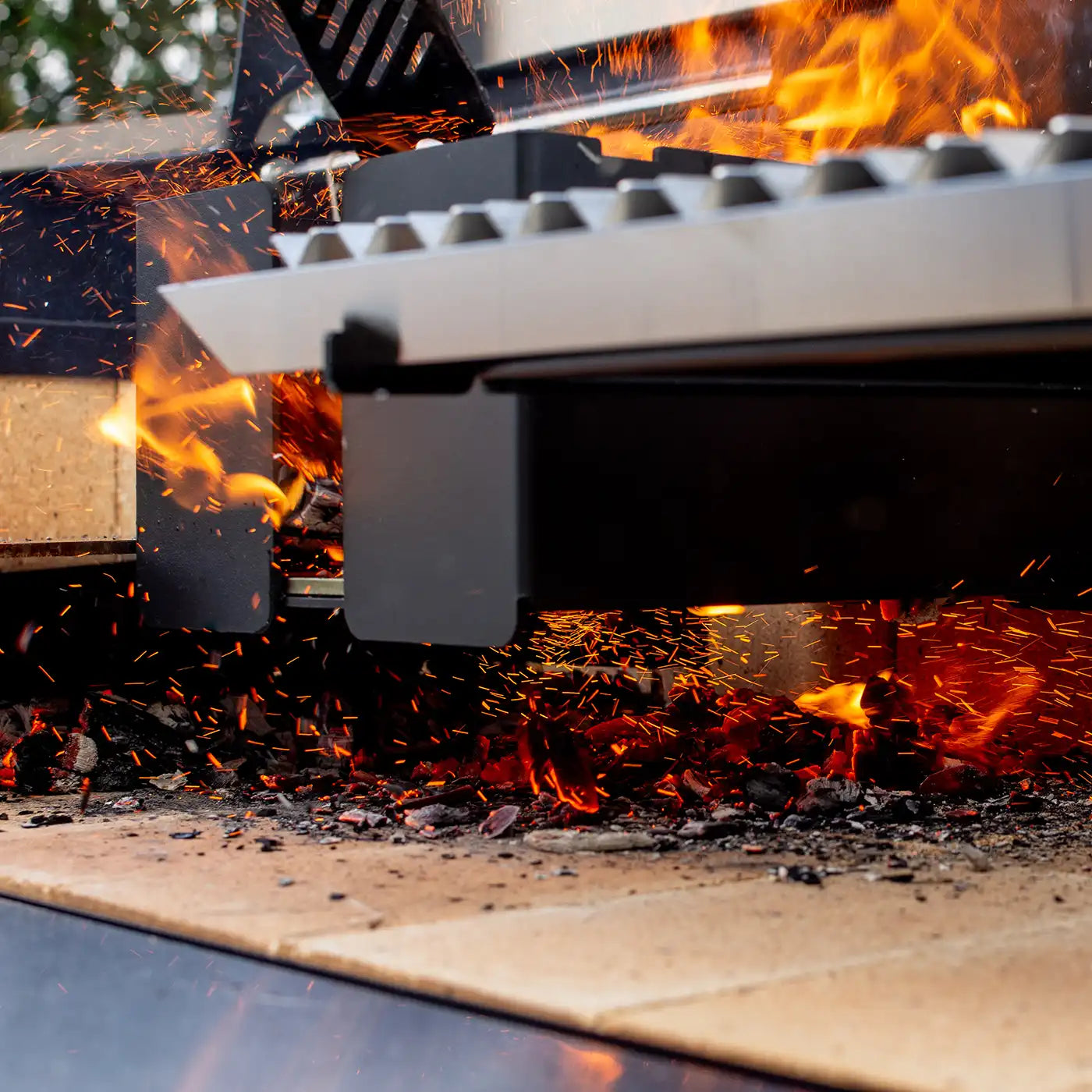
There’s something about standing in front of a real fire that awakens our primal instincts. The flames flicker, the smoke curls, and the smell of cooking food instantly makes everything feel alive. But if you want to cook well, it isn’t the flames you rely on. You rely on the embers. From them, you create heat zones that give you steady control without flare-ups.

What Are Heat Zones?
Heat zones are just different areas of warmth across the grill. One side is hotter, perfect for giving steaks a proper sear. The medium zone is where sausages, vegetables, or chicken can cook through without burning. And then a gentler area for resting or cooking large meats slowly.
It doesn’t have to feel technical. Heat zones simply let you work with the fire instead of fighting against it. Rather than piling everything over one blaze, you give each item the heat it needs to cook properly.
The secret is that embers deliver a steady, reliable heat. Flames may look exciting, but they are unpredictable. Learning to think in terms of where the embers sit changes your whole approach to grilling.

How to Manage Heat Zones
Once you know your zones, timing becomes straightforward. As many have discovered, popping a sausage in the wrong place, at the wrong time, can be a critical error!
If you want intense heat, pile the embers together in one spot. That becomes your searing zone. For something more moderate, spread them out a bit. Thinner layers give gentler, even cooking. Leave part of the grill with fewer embers and you’ve created a cooler zone, where food can finish, or big joints can cook slowly.
The adjustable v-groove grill on an Asado helps too. Lower the grill closer to the embers if you need more intensity, or raise it slightly for slower cooking. Combined with how you arrange the embers, it gives a whole new level of control.

Tools That Help
Some things make managing heat zones easier. The included BBQ rake is an obvious one. It lets you push embers together, pull them apart, or top up spots that are losing heat. You are constantly shaping the fire to suit what you are cooking, and the rake makes it simple.
The firebox kit is an optional extra but useful for longer cooks, or ones needing multiple heat zones. It produces a steady supply of embers, so you can maintain your zones without disturbing the food. It keeps everything consistent and makes extended cooking much less stressful.

Bringing It All Together
Heat zones make grilling feel calmer, especially when you are cooking multiple dishes at once. You don’t have to chase flames or guess if somewhere is too hot. You know where the intense spots are, where the gentler zones sit, and you can move food around without panic.
It’s a simple idea, but it changes the way you cook. The fire still gives the show, but you are the one directing it. With a little practice, some careful ember management, and the right tools, you end up with food cooked perfectly and a BBQ that feels completely under control.

FAQs
How do I identify the heat zones on my grill?
Light your fire and observe the grill’s surface. The areas directly above hot embers are high heat, zones further away are medium, and edges or corners are cooler. A simple trick is to hold your hand over the grill: the longer you can keep it there, the cooler that spot is.
If an item is burning, should I move the embers?
If you have something on the grill that is cooking faster than you want it to, then you probably do have too many embers beneath it. However, the grill may still be hot so you may need to remove the meat from that zone entirely and reconfigure your zones.
This is an occupational hazard of live-fire grilling, so if in doubt, pull it out — advice that goes far beyond grilling.
Can small grills cook multiple items at once?
Yes, organize by zone and cooking speed, with slow items in cool zones, medium items in the middle, and quick items over high heat. Staggering prevents overcrowding and flare-ups. Even a small grill can handle a full cook this way.
What are heat zones, and why are they important?
Heat zones are areas of your grill that naturally vary in temperature. Using them strategically lets you cook different foods at the right heat without constant supervision. High-heat zones are perfect for searing, medium zones for steady cooking, and cooler edges for slow-cooked items.
Can vegetables be cooked in high-heat zones?
Some vegetables, like bell peppers, asparagus, and zucchini, can handle quick sears over high heat. Others, like potatoes or corn, do better in medium or cool zones to cook through evenly. Knowing your vegetables prevents uneven cooking.
How do I know when a large cut is done without cutting it open?
The most reliable method is using a meat thermometer to check the internal temperature. You can also use touch: firmer resistance usually indicates more doneness, while a slight jiggle suggests medium or rare. Combining both methods helps you avoid overcooking, keeps juices locked in, and ensures even results throughout the cut.
Share:
A No-Stress Approach to Cooking Multiple Dishes at once
The Konro PRO 5.4: The Ultimate Campervan Cooking Companion